Client

Briggs Marine (TfL)

Value

£1.9 million

Sectors & Services

Marine Structures Concrete Repair Projects

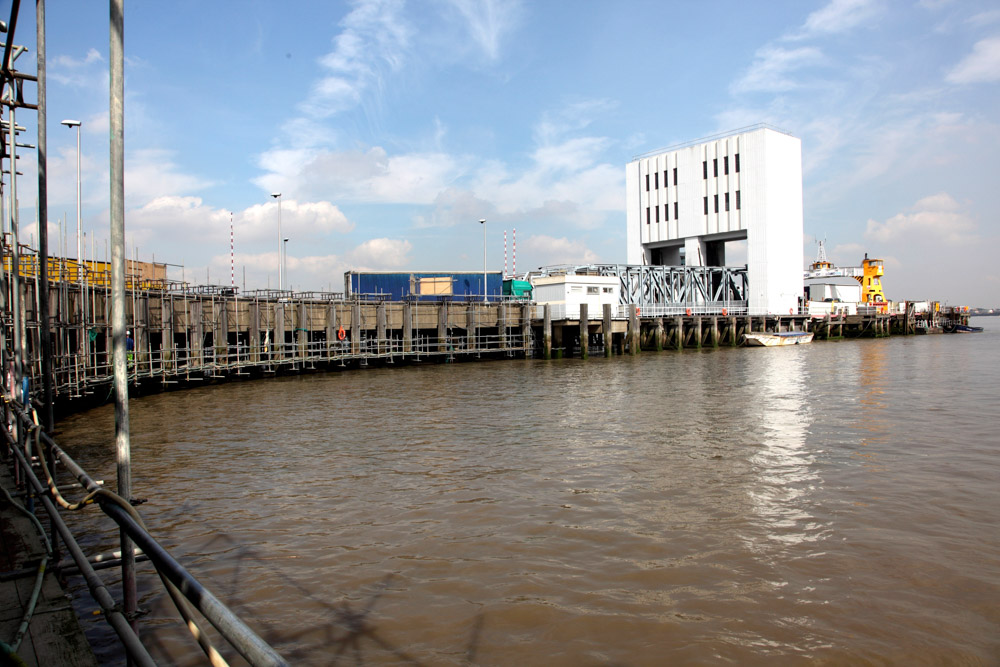
The Woolwich Ferry is a critical transport link across the River Thames, providing a free service between Woolwich and North Woolwich and connecting the North and South Circular Roads. The service is heavily trafficked and depends on reinforced concrete approach viaducts, or jetties, to safely load and unload cars and heavy goods vehicles.

Following a series of inspections and investigations, deterioration in the form of concrete spalling was identified to the piles and columns supporting both the north and south approach viaducts. In response, a targeted structural refurbishment was commissioned in 2013 to address the defects and safeguard the long-term performance of this essential piece of London’s transport infrastructure.

Services undertaken

  • Structural concrete repairs to piles and columns

  • Investigation-led repair strategy development

  • Selection and application of fast-setting dry spray concrete

  • Hydrodemolition for controlled removal of defective concrete

  • Design and implementation of top-down access methodology

  • Fully enclosed debris containment to protect the river environment

  • Tidal working planning and sequencing

  • Delivery of repairs within a live, operational ferry environment


Tailored tools for every job

After an extensive tender and technical review process, CRL was appointed to undertake the structural repairs to both the north and south approach viaducts over a six-month contract period. The marine environment presented significant challenges, not least tidal fluctuations of up to seven metres, which imposed strict constraints on working windows and material performance. CRL undertook a thorough assessment of the specified repair materials alongside alternative options to ensure suitability for the tidal regime and operational requirements of the ferry service.

The selected solution was Natural Cements SHOTCRETE 530 dry spray concrete. This fast-setting, rapid strength gain material was ideally suited to the works, allowing broken-out areas to be reinstated confidently between tidal cycles without risk of washout or premature failure. Its performance characteristics ensured that structural repairs could be completed safely and efficiently within limited tidal windows, while achieving the required durability and bond to the existing substrate.

Access strategy was a critical component of the methodology. The jetties were required to remain fully operational throughout the works, with ferry movements continuing uninterrupted. In addition, repairs could only be carried out when tidal conditions permitted, and strict environmental controls were in place to prevent debris or materials entering the river or foreshore. CRL developed an innovative top-down access approach, selected for its advantages in safety, mobilisation efficiency and cost control. This approach enabled works to be undertaken from above while maintaining ferry operations below.

Concrete removal was carried out using hydrodemolition, providing controlled breakout without inducing further damage to the surrounding concrete. Areas subject to hydrodemolition were fully enclosed with debris netting and plywood containment to manage flying debris and protect the river environment. CRL’s ability to integrate material selection, access design and sequencing demonstrates its expertise in complex marine concrete repairs and structural repairs UK, delivered within live transport assets.

"Working on a fully operational site, coupled with having to work around the tides produced their own set of difficulties. However with detailed planning and good communication with the ferry operator we managed to keep to the programme and complete the project on time."

Chris Dawson | Senior Site Manager | CRL

The refurbishment strategy adopted for the Woolwich Ferry viaducts focused on achieving durable structural repairs capable of withstanding a highly aggressive tidal environment. Careful surface preparation using hydrodemolition ensured clean, sound substrates, promoting long-term bond performance of the repair materials. The use of rapid strength gain dry spray concrete reduced vulnerability during tidal cycles and enhanced the resilience of the reinstated sections.

By addressing active spalling and reinstating the structural integrity of the piles and columns, the works significantly reduced the risk of further deterioration and unplanned maintenance. The methodology adopted by CRL supports a proactive asset management approach, extending service life while minimising disruption to this vital ferry link. The result is a robust repair solution that enhances durability, improves long-term performance and reduces future intervention requirements for this essential Thames crossing.

Protection beyond the repair