Client
Vercity Group (formerly UK Highways M40 Limited)
Value
£950k
Sectors & Services
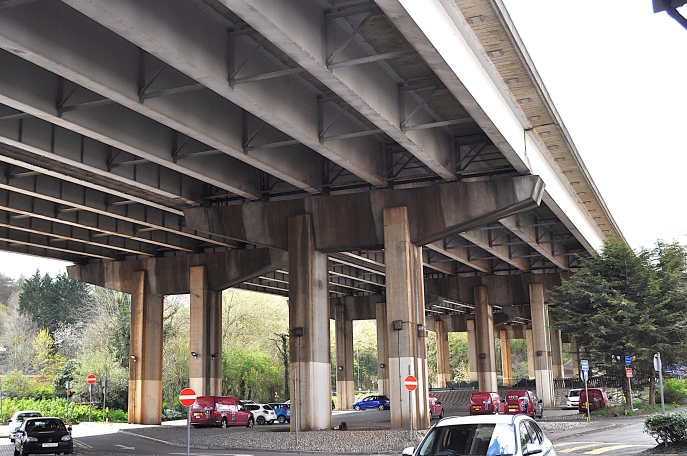
The Loudwater Viaduct carries the M40 motorway over the River Wye Valley and forms a critical part of the strategic highway network. Constructed in 1968, the 500-metre-long structure comprises twin three-lane decks supported by reinforced concrete piers and crosshead beams. Managed by the Vercity Group under a long-term PFI concession, the viaduct is required to provide reliable service life until its return to the Highways Agency.
Inspections identified early-stage deterioration to the concrete crossheads caused by chloride ingress from de-icing salts migrating through deck joints. Although not yet structurally critical, the defects posed a long-term durability risk, prompting the need for targeted concrete repairs and proactive corrosion mitigation.
Services undertaken
-
Hydro-demolition of spalled and chloride-contaminated concrete
-
Concrete reinstatement using sprayed concrete techniques
-
Ultra-high pressure water jetting for surface preparation
-
Design and installation of impressed current cathodic protection system
-
Installation of titanium mesh anode and sprayed concrete overlay
-
Concealed electrical cabling and junction box installation
-
Application of protective waterproof coating to repaired concrete
-
Installation of transformer rectifier and monitoring control equipment


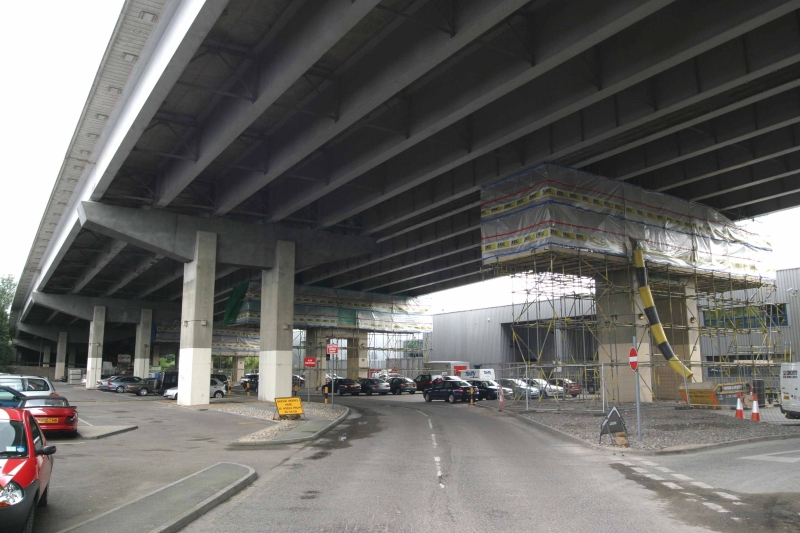


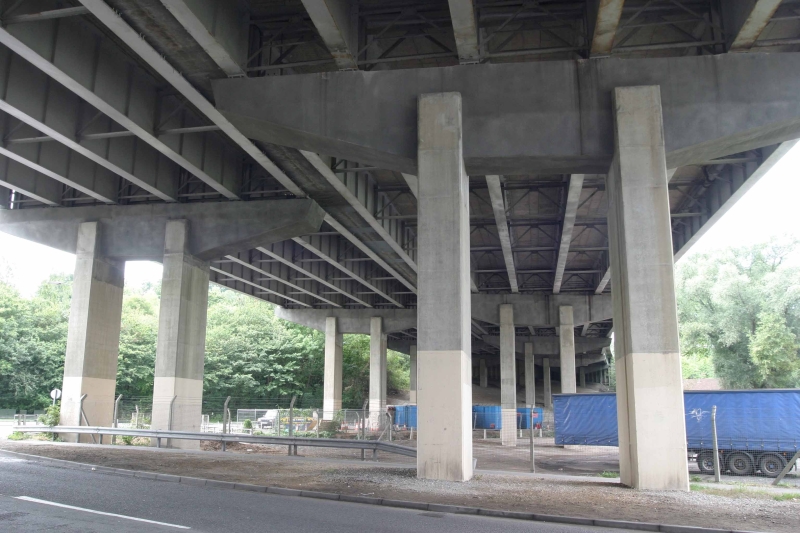

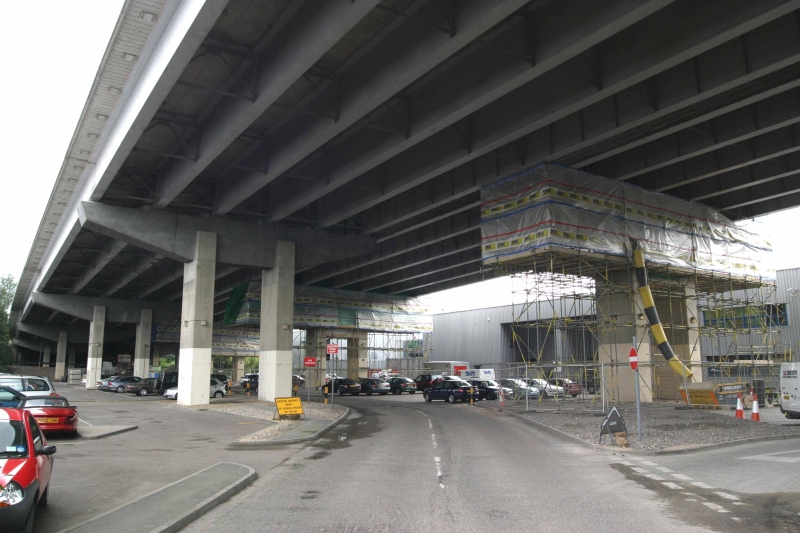


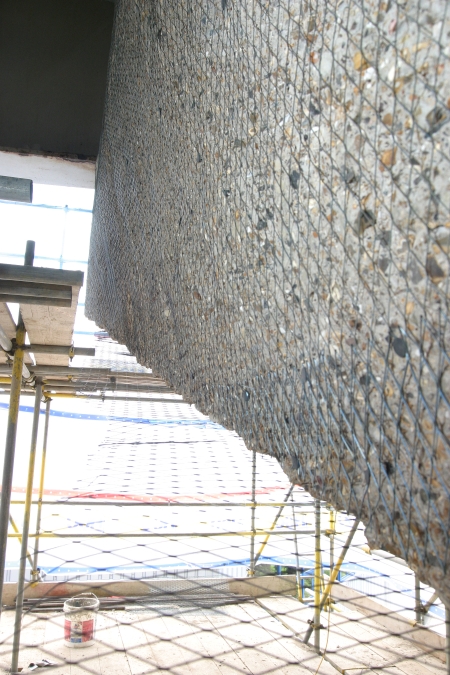


CRL was appointed as main contractor to deliver specialist concrete repairs and to design and install an Impressed Current Cathodic Protection system in accordance with performance requirements set by Hyder Consulting. Access to the works was achieved through comprehensive traffic management, temporary diversions and the erection of scaffolding to all 22 crosshead beams beneath the viaduct, spanning both an industrial area and a local road network.
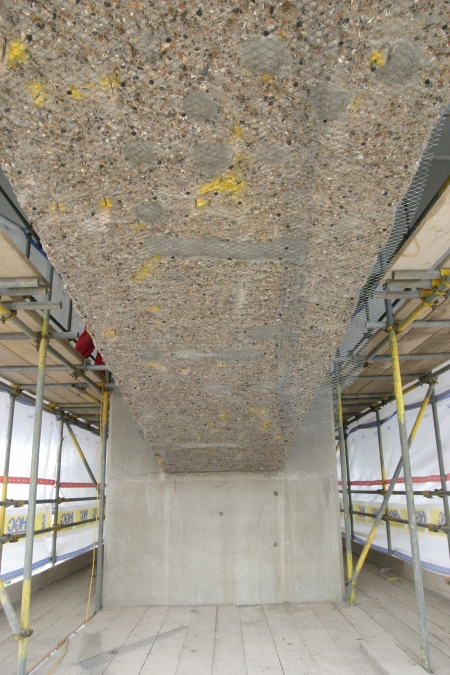
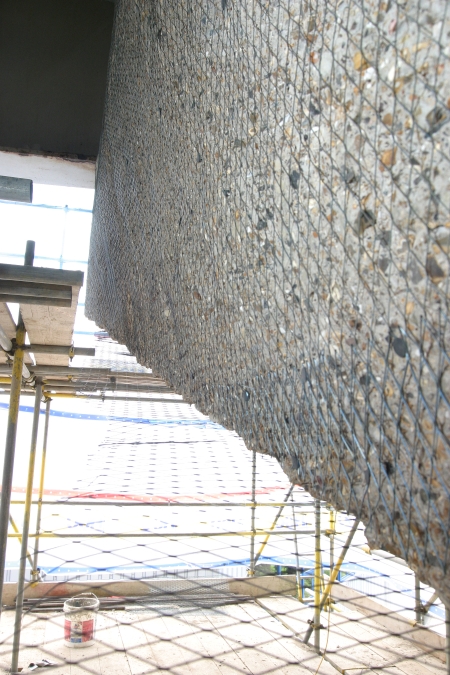
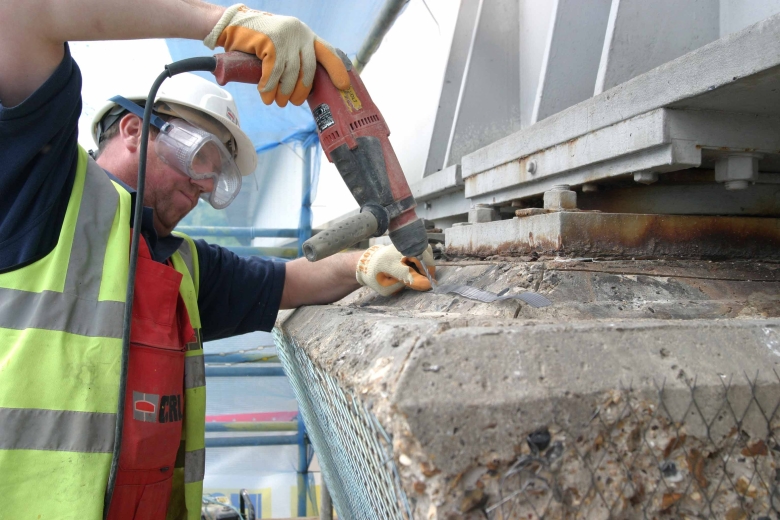
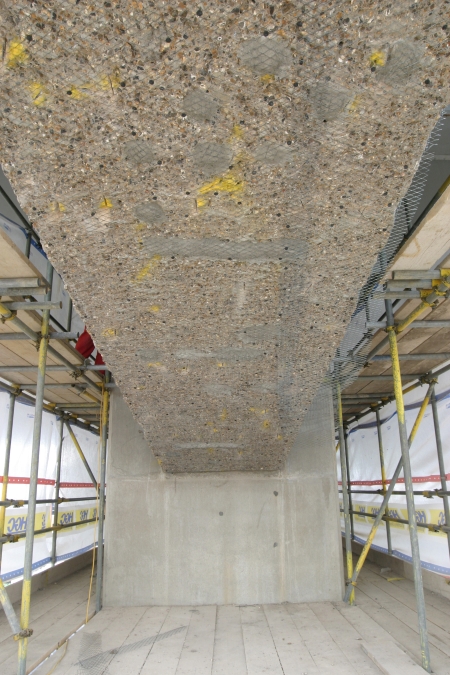
Concrete repairs commenced with hydro-demolition to carefully remove spalled and contaminated concrete while preserving sound substrate. Sprayed concrete was then applied to reinstate the original beam profiles. Ultra-high pressure water jetting was subsequently used to prepare the beam surfaces, producing an exposed aggregate finish suitable for the installation of a surface-mounted titanium mesh anode system. This approach was selected following corrosion investigations which confirmed that the density of existing reinforcement precluded the use of drilled anode rods.
The titanium mesh anode was mechanically fixed to the prepared concrete surfaces and encapsulated within a further sprayed concrete overlay. The overlay was intentionally left in an as-sprayed finish to minimise the risk of delamination and to ensure long-term electrical continuity between the anode and the reinforcement. All cabling was concealed within the concrete overlay and routed through the central service duct between the twin decks, with adjacent beams linked via junction boxes. Power was supplied through a centrally located transformer rectifier unit positioned at the base of a pier, providing a controlled direct current to the system.
CRL’s integrated delivery of repair, corrosion control design and installation demonstrates its capability in delivering complex structural repairs UK wide, supporting long-term asset management objectives for critical highway infrastructure.

This project was at the time one of the largest bridge cathodic protection systems utilising a mesh and overlay anode installed in the UK since the A92 Tay Road Bridge in the early 1990s ...
The installation of the ICCP system provides a proactive and durable solution to halt ongoing reinforcement corrosion and significantly extend the service life of the Loudwater Viaduct. By applying a controlled electrical current to the reinforcement, the effects of chloride contamination from de-icing salts are neutralised, preventing further steel deterioration within the concrete crosshead beams. The combination of thorough surface preparation, high-quality sprayed concrete reinstatement and a waterproof protective coating ensures long-term durability and resilience.
The titanium mesh and overlay anode system is designed to deliver an anticipated service life of approximately 50 years, substantially reducing future maintenance requirements and whole-life costs. CRL’s specialist approach ensures the structure remains compliant with PFI obligations, improves long-term performance and safeguards a vital transport link with minimal ongoing intervention.


