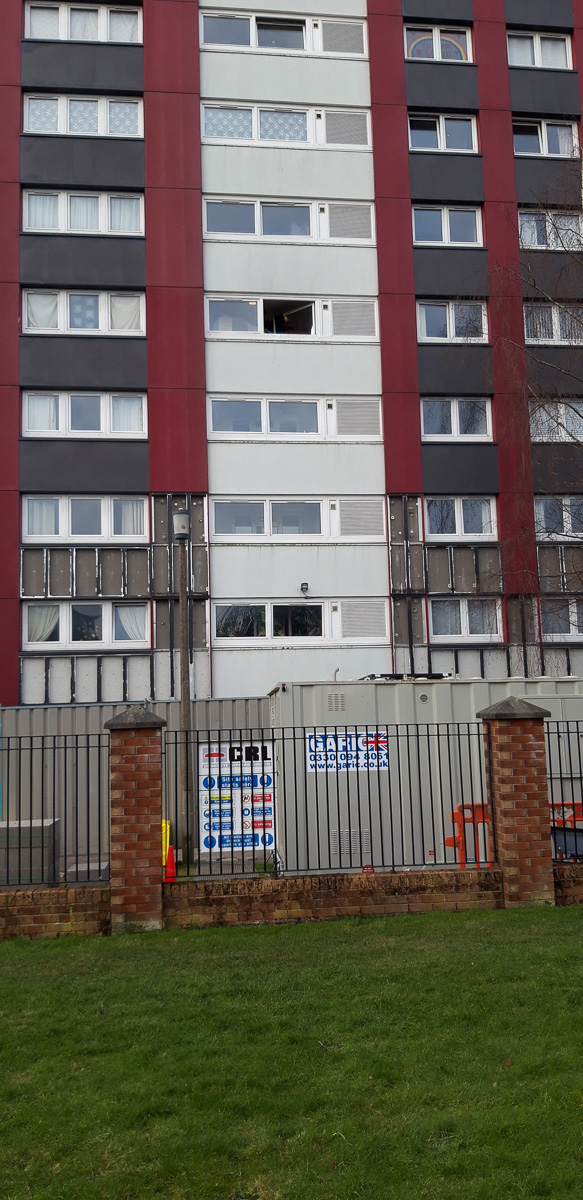
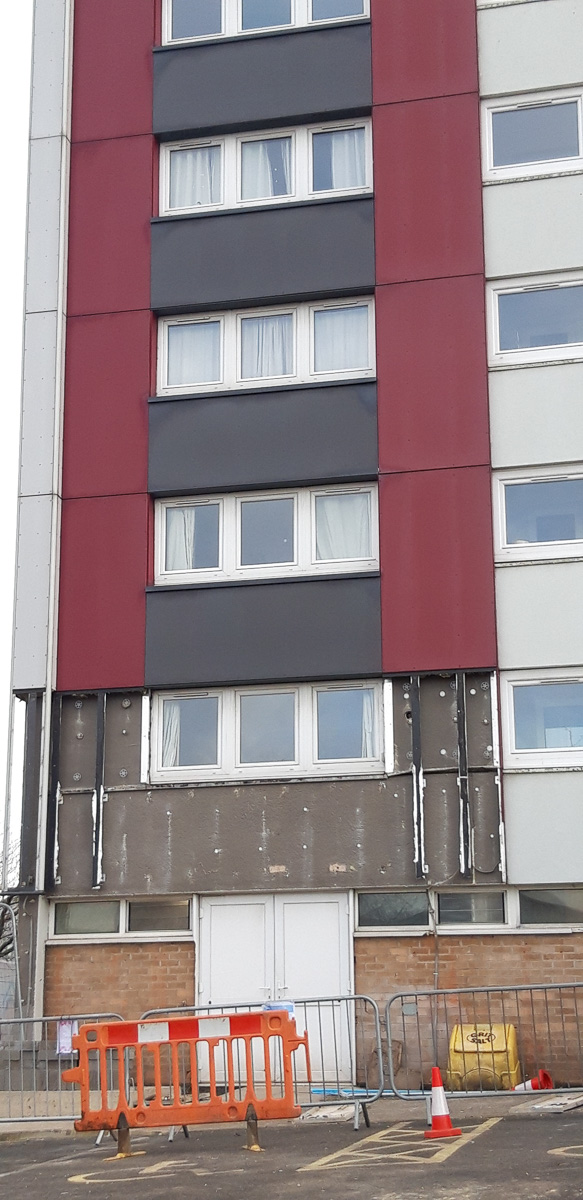
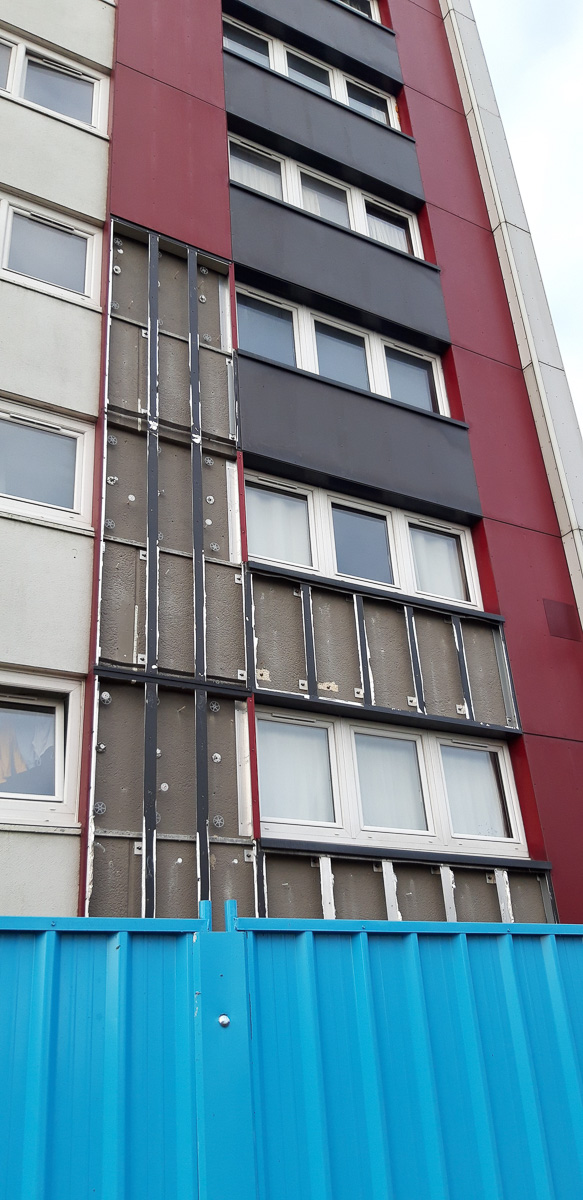
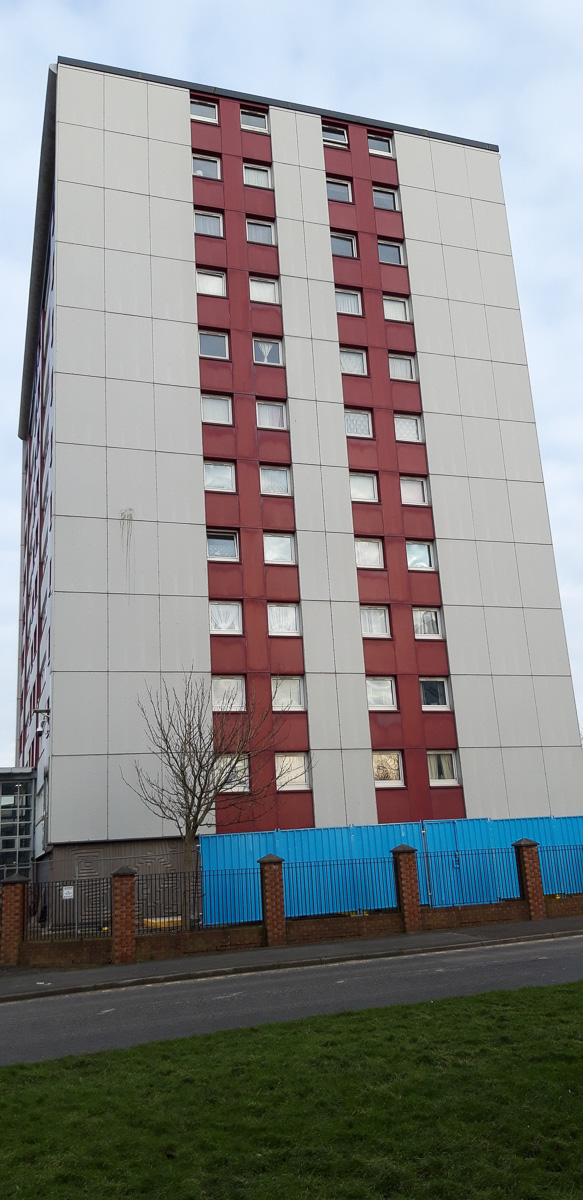
The scope of works involved the complete removal of the existing rainscreen cladding system, including all associated insulation materials and steel support framing, across all three tower blocks. Initial low-level works were undertaken using aluminium tower scaffolds, allowing the safe removal of panels within reach prior to the installation of mast climbers. Once these preliminary activities were completed, mast climber access platforms were erected to the full height of each block, providing continuous, level working platforms to all elevations.
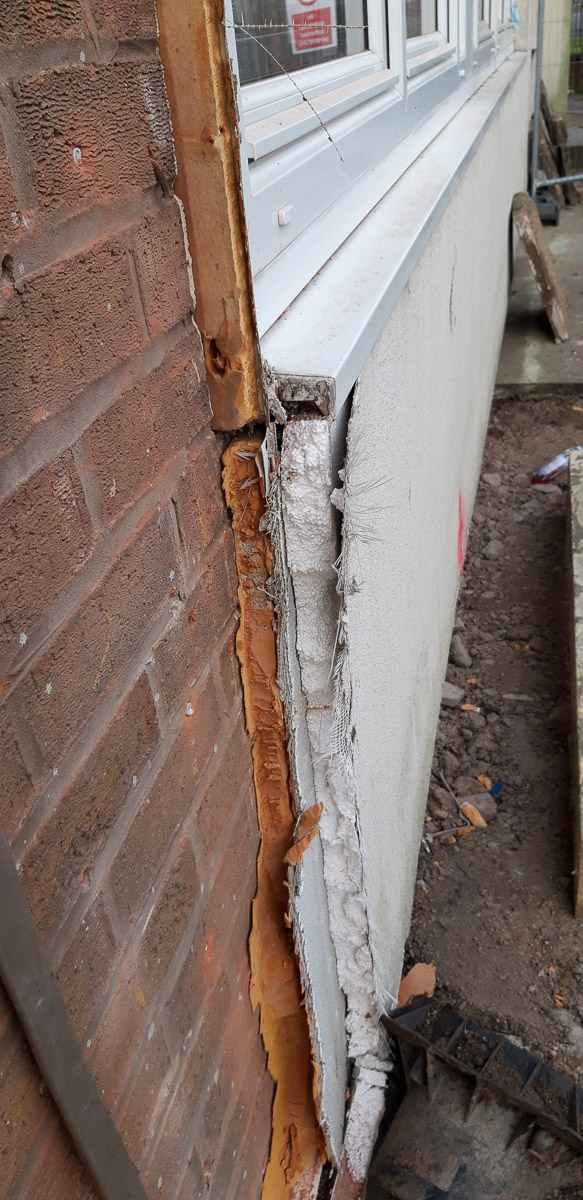
Each external cladding panel was removed individually by carefully extracting the fixing bolts that secured the panels to the steel rail support system. Following panel removal, the underlying mineral wool insulation was taken out. In certain areas, large foam insulation panels were also present and were systematically removed. Throughout the process, any exposed areas of the building envelope were protected using fire-proof blanket barriers to maintain safety and mitigate risk.
A critical element of the methodology was the elimination of ignition sources. No mains-powered hand tools were used at any stage of the works, significantly reducing the risk of sparks and ensuring strict adherence to fire safety requirements. Once all panels and insulation had been removed, the steel support frame that fixed the cladding system back to the main structure was dismantled and taken away.
All fixing and bolt holes resulting from the removal of panels, insulation systems, and steelwork were made good across the entire structure, restoring the integrity of the external façade. CRL’s experience in high-rise remediation, structural repairs UK, and asset management ensured that the works were delivered with precision, robust safety controls, and minimal disruption, demonstrating the company’s capability in complex building safety projects.